
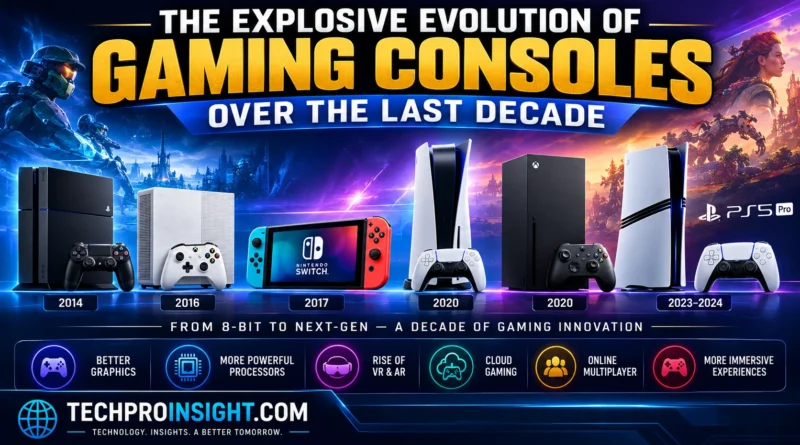
The Explosive Evolution of Gaming Consoles Over the Last Decade
Gaming consoles have changed more in the last ten years than in the previous three decades combined. What started as simple boxes for playing games has turned into powerful systems that rival high-end PCs. This explosive evolution has reshaped how millions of people play, connect, and experience entertainment at home. In this blog, we explore how gaming consoles evolved, what technologies powered the shift, and where these devices are headed next.
Where It All Started
Ten years ago, gaming consoles were fairly simple machines. Most were built to deliver decent graphics and basic online features, nothing more.
- No true 4K support
- Streaming wasn’t a priority yet
- Cloud gaming was barely a concept
Back then, these systems were judged mainly on exclusive titles and raw hardware specs, not on ecosystem or connectivity.
The Leap to High Performance
As technology advanced, gaming consoles started packing serious hardware. Today’s models support 4K resolution, ray tracing, and ultra-fast SSD storage. This leap changed expectations overnight. Games that once took minutes to load now boot in seconds. Manufacturers competing in this space began focusing heavily on speed and visual fidelity, pushing the whole industry forward at a rapid pace.
Embracing Cloud and Streaming
One of the biggest shifts has been the move toward cloud gaming. Modern consoles let users stream titles without downloading massive files first. This means storage limits matter far less than they used to. Players can now jump into a game instantly, often from multiple devices. Streaming integration has also blurred the line between consoles, PCs, and mobile gaming.
Becoming Complete Entertainment Systems
Gaming consoles today aren’t just for gaming. Most now include apps for movies, music, and social media. This shift turned them into all-in-one entertainment hubs for the living room. Families use them for streaming shows just as often as playing games. This transformation into full entertainment systems is one of the biggest changes of the decade.
Online Connectivity Takes Center Stage
Multiplayer gaming exploded as online infrastructure improved. Cross-platform play now lets people on different systems play together seamlessly. This connectivity revolution made the whole experience more social than ever. Voice chat, party systems, and friend lists are now standard features.
Subscription Models Change the Game
Another major trend is the rise of subscription-based libraries. Instead of buying single titles, users can subscribe to hundreds of games directly through their console. This shift has made gaming more affordable for casual players, while giving manufacturers a steady revenue stream beyond hardware sales.
Virtual Reality Enters the Picture
Virtual reality has started merging with mainstream systems, with some consoles now offering VR headset compatibility for deeper immersion. This space is still evolving, but the direction is clear: more immersive experiences beyond a flat screen.
What’s Next for Gaming Consoles
The future looks even more exciting. Expect gaming consoles to lean further into AI-powered features, smarter recommendations, and seamless cloud integration. These devices will likely shrink in size while offering even more power. Portability combined with performance seems to be the next big trend.
Frequently Asked Questions
1. How have gaming consoles changed in the last 10 years? They’ve moved from simple, single-purpose gaming machines to powerful, connected entertainment systems with 4K graphics, cloud streaming, and built-in media apps.
2. What is cloud gaming on consoles? Cloud gaming lets players stream games directly from remote servers instead of downloading or installing them, reducing storage needs and load times.
3. Are gaming consoles better than PCs now? Consoles now offer performance close to mid-to-high-end PCs, with the added benefit of simplicity, lower cost, and optimized software.
4. What’s the next big trend in gaming consoles? AI-driven features, smaller hardware footprints, and deeper cloud integration are expected to define the next generation.
5. Do modern consoles support virtual reality? Yes, several current-generation consoles now support VR headsets for more immersive gameplay.
Final Thoughts
The explosive evolution of gaming consoles over the last decade shows no signs of slowing down. From simple machines to powerful, connected entertainment systems, they have redefined how we play and consume content. As technology keeps advancing, gaming consoles will continue to surprise us with faster performance, deeper immersion, and smarter features.
Enjoyed this breakdown? Subscribe to TechProInsight for more deep dives into gaming, technology trends, and everything shaping the future of gaming ai and for digital entertainment.