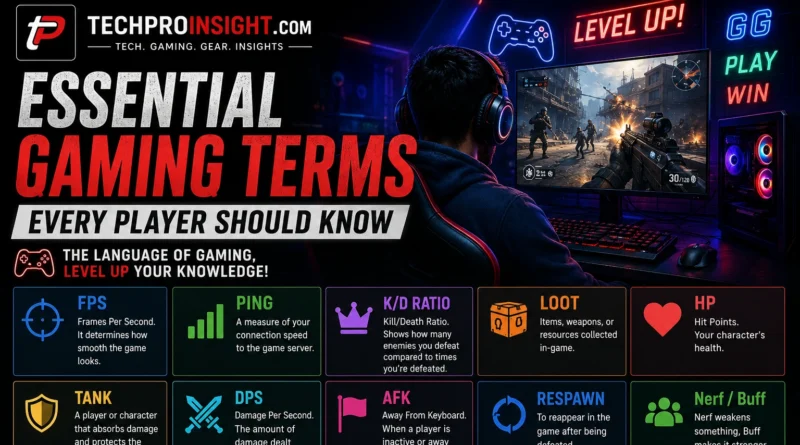
Essential Gaming Terms Every Player Should Know
If you’re diving into the world of video games, you’ll quickly notice a language of its own. Understanding common gaming terms makes it easier to follow guides, join multiplayer matches, and chat with other players without feeling lost. This guide breaks down the most useful terms by category, so whether you’re a beginner or brushing up, you’ll have a solid grip on the basics.
Basic Gaming Terms Everyone Should Know
Every player runs into these words early on, no matter what genre they play.
- NPC (Non-Playable Character): A character controlled by the game, not a real player.
- Respawn: When a character comes back to life after being defeated.
- Loot: Items, weapons, or rewards collected during gameplay.
- Grinding: Repeating tasks to gain experience, resources, or levels.
- Patch: An update released to fix bugs or add new content.
- Buff/Debuff: A temporary boost or reduction to a character’s abilities.
These basic terms show up across almost every genre, so they’re a great starting point for new players.
Multiplayer and Online Gaming Terms
Once you jump into online play, a new set of words becomes essential.
- Lag: A delay between a player’s action and the game’s response, usually due to connection issues.
- Ping: A measurement of connection speed between a player and the game server.
- Matchmaking: The system that pairs players of similar skill levels together.
- Team Wipe: When an entire team is eliminated at once.
- Camping: Staying in one spot to ambush other players, rather than moving around the map.
- Griefing: Intentionally disrupting or annoying other players rather than playing normally.
Knowing these terms makes multiplayer sessions far less confusing, especially in competitive modes.
Esports and Competitive Gaming Terms
As gaming has grown into a competitive industry, its own esports vocabulary has grown with it.
- Meta: The most effective strategies or characters currently favored by top players.
- Nerf: When a game developer weakens a character, weapon, or ability.
- Carry: A skilled player who significantly helps their team win.
- GG (Good Game): A common phrase used at the end of a match to show sportsmanship.
- Smurf: An experienced player using a new or low-level account to play against beginners.
- Throw: Losing a match despite having a clear advantage, usually due to mistakes.
These words are especially common in esports commentary and competitive gaming communities.
Genre-Specific Terms Worth Knowing
Different game genres bring their own unique vocabulary, and knowing a few key words can help you get up to speed faster in any style of play.
RPG (Role-Playing Game) Terms
- Grind: Repeating battles or tasks to level up a character.
- Tank: A character built to absorb damage and protect teammates.
- DPS (Damage Per Second): A character or role focused on dealing damage quickly.
Strategy Game Terms
- Micro: Managing individual units with precision during battle.
- Macro: Managing overall economy, resources, and long-term strategy.
- Rush: An early aggressive attack meant to catch opponents off guard.
Shooter Game Terms
- Headshot: A shot landed directly on an opponent’s head, often dealing extra damage.
- Spawn Kill: Attacking an opponent right as they reappear in the game.
- Wallbang: Shooting an enemy through a wall or solid object.
Learning genre-specific vocabulary helps players adapt quickly when trying new types of games.
Technical Gaming Terms
Some words relate more to hardware, performance, and how games actually run behind the scenes.
- FPS (Frames Per Second): A measure of how smoothly a game runs visually.
- Frame Rate Drop: A temporary dip in performance, often causing stutters.
- DLC (Downloadable Content): Extra content released after a game’s initial launch.
- Cross-Play: The ability to play with people on different gaming platforms.
- Save State: A saved snapshot of progress that can be reloaded later.
- Input Lag: The delay between pressing a button and seeing the action on screen.
Understanding these technical terms helps when troubleshooting performance issues or comparing systems.
Common Gaming Abbreviations
Beyond full terms, gaming culture is full of short abbreviations that players use constantly in chat and voice communication.
- AFK: Away From Keyboard, meaning a player is temporarily inactive.
- BRB: Be Right Back, used when stepping away briefly.
- OP: Overpowered, describing something considered too strong compared to alternatives.
- RNG: Random Number Generator, referring to the luck-based systems behind loot drops or outcomes.
- AOE: Area of Effect, an attack or ability that impacts multiple targets at once.
- HP/MP: Health Points and Mana Points, tracking a character’s health and magic resources.
These abbreviations save time during fast-paced matches and are worth memorizing early on.
How Gaming Slang Spreads Across Communities
Much of today’s gaming vocabulary didn’t start in game design documents. It grew organically from players themselves, spreading through livestreams, forums, and voice chats. Popular streamers and esports commentators often popularize new phrases, which then get picked up by wider communities. Over time, some terms even cross over into mainstream internet culture outside of gaming altogether. This organic growth is part of what makes gaming language feel alive. New words appear as trends shift, while older terms sometimes fade out or change meaning entirely.
Why Learning Gaming Terms Matters
Knowing this vocabulary isn’t just about sounding experienced. It helps players follow tutorials, understand patch notes, and communicate clearly during matches. It also makes joining new communities much easier. Whether you’re watching a livestream, reading a forum post, or teaming up with strangers online, shared vocabulary builds a sense of belonging. For anyone getting into gaming seriously, building this vocabulary early makes the entire experience smoother and far more enjoyable. Even casual players benefit from knowing the basics, since these terms show up constantly in patch notes, game menus, and online chats.
Must Read: The Explosive Evolution of Gaming Consoles Over the Last Decade
Frequently Asked Questions
1. What are the most important gaming terms for beginners?
Terms like NPC, respawn, loot, and grinding are among the first ones new players typically encounter.
2. What does “meta” mean in gaming?
It refers to the most effective strategies, characters, or builds currently considered strongest by the player community.
3. What’s the difference between lag and ping?
Ping measures connection speed to a server, while lag refers to the noticeable delay players experience because of that connection.
4. What does GG mean?
GG stands for “Good Game” and is commonly said at the end of a match, win or lose.
5. What is the difference between micro and macro in strategy games?
Micro refers to controlling individual units precisely, while macro refers to managing overall resources and long-term strategy.
6. Why do gaming terms change over time?
As games evolve and new genres emerge, communities create new slang to describe fresh mechanics, strategies, and trends.
Final Thoughts
Learning essential gaming terms is one of the easiest ways to feel more confident, whether you’re playing casually or competitively. From basic jargon to genre-specific slang and esports vocabulary, this shared language connects players across every platform and style of game.
Want more gaming guides like this? Subscribe to TechProInsight for more breakdowns of gaming culture, technology and everything shaping how we play.